offshore

St. Lucia: An Emerging International Offshore Destination

St. Lucia, a paradise nestled in the Caribbean Sea and the Atlantic Ocean, offers an enticing blend of secrecy, flexibility, and low taxation that has made it an attractive offshore financial center. Its diverse range of offshore financial products and services draws international investors and companies alike, promising exciting possibilities for offshore company formation. This burgeoning interest has been facilitated by the International Business Companies Act 1999, a testament to St. Lucia’s commitment to bolstering its offshore sector. Broad Spectrum of Offshore Services St. Lucia offers a broad array of offshore financial services that include the establishment of offshore trusts, mutual fund companies, and insurance companies. Also on offer are offshore banking accounts and other incorporation opportunities, all of which are designed to provide a wide range of possibilities for diversifying an international offshore business portfolio. St. Lucia prides itself on maintaining complete confidentiality of client details, ensuring absolute anonymity and security for all offshore company formation services. These services are governed by the St. Lucia Companies Act, formed in 1996 and regularly updated to remain in line with international transparency initiatives. Remarkably, St. Lucia’s financial system has consistently evaded international scrutiny and foreign governmental pressure to disclose details of its offshore financial operations. Unlike many Caribbean jurisdictions, St. Lucia continues to be a preferred destination for international investors seeking secure and reliable offshore opportunities. The Attraction of St. Lucia as a Tax Haven The key attributes that make St. Lucia a favored tax haven include complete confidentiality for International Business Companies (IBCs), the broad operational capabilities granted by the International Business Companies Act, and the simplicity of the incorporation process. Additional attractions include: A Closer Look at St. Lucia: Location and Political Structure St. Lucia is part of the Windward Islands, located above Trinidad and Tobago. The island nation is a representative government established in 1840 and gained independence in 1979, although it continues to be part of the British Commonwealth. The nation has a two-party parliamentary system, with the executive branch held by the Prime Minister and his cabinet, supported by a majority in the House of Assembly. Seats in the House are open to popular election, while the Senate seats are both popularly elected and appointed. The country is divided into 11 electoral districts. The St. Lucia Labor Party and the United Workers Party are the primary political entities. The government of St. Lucia maintains active relationships with various regional and international treaties and organizations. Economy and Infrastructure Tourism and the offshore banking industry are the principal contributors to St. Lucia’s GDP, accounting for 65% of the island’s revenue. Other key sectors include manufacturing and export of bananas, mangoes, and avocados. The island’s infrastructure includes modern facilities like roads and ports, with ongoing development in rural areas. It also has two airports and modern telecommunication services. However, the economy faces vulnerabilities due to potential natural disasters, tourism fluctuations, and reliance on foreign oil. St. Lucia uses the Eastern Caribbean Dollar (XCD), pegged to the USD, providing a stable economic environment. The country has experienced steady growth, with the economy growing by an average of 3.5% per year, thanks largely to the growth in tourism and the offshore sector. Legal System and Corporate Legislation St. Lucia operates under a mixed legal system that incorporates both Civil and English Common Law. Local statutes govern the international financial and offshore sector, while the law pertaining to the International Business Companies Act is administered locally. The International Business Companies Act 1999 established the framework for the formation and operation of IBCs in St. Lucia. Further amendments between 2000 and 2001 have enhanced the scope of this legislation, underscoring St. Lucia’s dedication to fostering a transparent, investor-friendly offshore environment. In conclusion, St. Lucia’s blend of confidentiality, flexibility, and low taxation make it an increasingly appealing offshore tax haven. Its consistent avoidance of international scrutiny, coupled with a robust legislative framework, underscores its commitment to creating an investor-friendly environment.
Read more

Uncovering Offshore Tax Strategies: Is Puerto Rico Truly a Tax Haven?

The offshore tax landscape is riddled with complex strategies and regulatory nuances. It is often seen as a cryptic domain that serves the wealthy and well-connected. One jurisdiction that has stirred interest in the tax planning community is Puerto Rico, a Caribbean Island officially known as ‘The Commonwealth of Puerto Rico.’ In this article, we delve into the question, “Is Puerto Rico truly a tax haven?” Puerto Rico’s Attractive Tax Landscape Being a U.S. territory, Puerto Rico benefits from a significant degree of autonomy in corporate and tax legislation. The island has formulated a range of attractive tax and corporate policies over the years, resulting in an upsurge of foreign capital and businesses eager to leverage these benefits. Two landmark Acts—Act 20 and Act 22—have been instrumental in drawing attention to Puerto Rico’s potential as an offshore tax haven. Act 20 and Act 22: Tax Slashing Mechanisms These two acts have made significant waves in the offshore community by drastically reducing corporate tax rates to 4%. Additionally, they provide incentives to those who choose Puerto Rican residency. Governed by the General Corporations Act of 2009, these non-resident corporations have stirred much interest. For U.S. citizens spending at least 183 days a year in Puerto Rico, there is no requirement to pay U.S. federal tax on income and capital gains. This tax advantage, coupled with a thriving corporate environment, robust financial privacy, and secure financial vehicles, positions Puerto Rico as an attractive tax haven that is conveniently ‘close to home.’ Puerto Rico’s Corporate Climate: A Deep Dive Setting up an offshore business in Puerto Rico presents several advantages, including low corporate tax rates, U.S. tax exemptions, and high levels of privacy. Let’s explore these benefits in detail. Low Corporate Tax Rates and U.S. Tax Exemptions The Export Services Act (Act 20) caps the corporate tax rate for corporations exporting services from Puerto Rico at a low 4%. Special types of corporations deemed strategically important for Puerto Rico can even see this rate reduced to 3%. The Controlled Foreign Corporation (CFC) system in Puerto Rico also means that income generated from selling products to the U.S. is exempt from U.S. taxes. Furthermore, products imported from the U.S. are exempt from duty taxes. These exemptions, along with the fact that all income generated in Puerto Rico is free from additional U.S. federal tax, make the island highly attractive for tax strategists. High Levels of Privacy and a Strong Economy The island assures considerable privacy to corporations, with no public disclosure of shareholders’ and directors’ identities. Nominee shareholders and directors can be appointed for even greater privacy. Puerto Rico’s strong economy, sound business practices, and convenient offshore banking make it an attractive jurisdiction for businesses and investors. For U.S. citizens, the added advantages include a shared currency (the U.S. dollar), geographical proximity, and the ease of taking up residence. Puerto Rico: A Brief Overview Located in the North East Caribbean Sea, Puerto Rico, a U.S. territory, is inhabited by people considered U.S. citizens. The island’s political structure, while similar to the U.S., retains some autonomy, including its own executive political branch. Despite a history of substantial government debt, the island boasts an excellent infrastructure that makes it an ideal location for offshore company incorporation and residence. Puerto Rico’s legal system reflects its historical influences and is based on a mix of Spanish Civil Law and Common Law. Its corporate legislation, the Puerto Rico General Corporations Act of 2009, along with regulations from the Internal Revenue Code of 2011, make it an attractive destination for offshore corporations. Act 20 and Act 22: The Cornerstones of Puerto Rico’s Tax Attraction Act 20 and Act 22 constitute the bedrock of Puerto Rico’s tax strategy. Act 20 provides significant tax reductions to qualifying businesses, encouraging service exports from the island. Qualifying corporations can leverage the low corporate tax rate of 4%, and even a 0 – 3% rate under certain conditions. Act 22, on the other hand, lures wealthy investors and traders with the allure of eliminating capital gains tax completely. Combined, these Acts uniquely position Puerto Rico as an enticing tax haven, particularly for U.S. citizens. Given these benefits and Puerto Rico’s status as a U.S. territory, the island indeed qualifies as a tax haven, at least for U.S. citizens. However, the benefits and implications can vary for non-U.S. residents.
Read more

Uncovering Offshore Tax Strategies: Is Nevis Truly a Tax Haven?

The island of Nevis in the Caribbean has been a subject of growing interest for corporations and individuals keen on taking advantage of its reputed tax haven status. This article sheds light on the offshore tax strategies associated with Nevis and gauges the truth in its depiction as a tax haven. Nevis: The Offshore Jurisdiction of Choice Situated in a convenient time zone, blessed with tropical charm, and linked by language and law to English-speaking countries, Nevis holds significant appeal as an offshore jurisdiction. A stable democracy based on British Common Law, Nevis offers an open economy, a flexible corporate climate, and an amiable environment for offshore operations. The island stands out in the Caribbean for its robust security and asset protection policies, particularly those related to offshore company formation. The popularity of the Nevis LLC and Trust, and to a lesser extent, the under-publicized Multiform Foundation, have contributed to the island’s prominence in the offshore sector. Advantages of Nevis as a Tax Haven Nevis is recognized for its commitment to privacy and protection of legitimate business practices. Unlike some jurisdictions, it has a clean slate regarding allegations of money laundering or tax evasion. A Nevis offshore company enjoys a complete tax exemption on income generated outside Nevis. This extends to estate, inheritance, gift, duty, or capital gains taxes. Moreover, Nevis runs a Citizenship by Investment Program that bestows citizenship without residency requirements, extending the privilege to dependent family members. The country is an independent state, with a stable democratically-elected government, a well-educated English-speaking workforce, and up-to-date infrastructure. The regulations governing Nevis’s offshore company formation and operation are specified in The Nevis Business Corporation Ordinance-1984, modeled on Delaware corporate statutes. This ordinance lays out the requirements for forming Nevis companies, managing the company registry, and the responsibilities of the Nevis Registrar of Companies. A Closer Look at Nevis as a Tax Haven Location and Political Structure Nevis, along with St. Kitts, is part of the smallest sovereign state in the New World, in terms of size and population. This English-speaking nation, governed by British Common Law, follows a Constitutional Monarchy with the Queen of England as the Head of State. It achieved independence in 1983, yet retains Commonwealth status. Economy and Infrastructure Tourism, offshore business, the electronics industry, and the apparel industry are significant contributors to the Nevisian economy. With the U.S. as its leading trade partner, Nevis has demonstrated economic growth, steady exchange rates, and improving balances of payments over the years. Legal Framework Nevis’s legal system is rooted in English common law. Its laws for offshore companies are built upon Nevis LLC legislation, modeled after the Delaware LLC Act. Nevis offers superior asset protection compared to other offshore jurisdictions and has considerable restrictions on creditors’ rights. It does not recognize or enforce U.S. judgments or judicial orders. Conclusion Nevis’s image as a tax haven seems justified given the favorable tax policies, political stability, asset protection laws, and progressive business legislation. The appeal for corporations and individuals seeking tax-friendly jurisdictions is clear. However, for those contemplating moving their businesses offshore, it is essential to understand the legal and ethical implications fully and consider the potential reputational risks. An in-depth consultation with an international tax professional or attorney is advisable before making any such strategic decisions.
Read more

Dominica: A Premier Offshore Tax Haven

The Tropical Gem of the Caribbean Located amidst the multicultural islands that comprise the Eastern Caribbean, Dominica is renowned for its rich natural beauty and favorable tropical climate. Over recent years, the Dominican government has intensified its efforts to promote eco-tourism, capitalizing on the lush landscapes and unparalleled beauty of the island nation. Historically, the Dominica economy was significantly reliant on agricultural produce. However, in a strategic shift over the past two decades, Dominica has diversified its economic structure. Today, it incorporates small-scale industries, offshore investments, tourism, and geothermal energy production. To stimulate this growth and attract foreign investments, the government has implemented a series of lucrative incentives for investors. Favorable Offshore Regulations and Privacy Laws Dominica has a progressive framework for establishing and operating offshore companies. The process for setting up a company in Dominica is streamlined, and the country offers robust privacy laws to protect offshore investments. Furthermore, it may also be possible to secure a Dominica offshore banking license as the government aims to expand its financial sector. A noteworthy aspect of the Dominican offshore landscape is its economic citizenship program. Recognized as one of the least expensive in the world, this program provides an opportunity for expatriates to acquire Dominican citizenship. Advantages of Operating from Dominica Conducting business in Dominica comes with a myriad of advantages. Notably, English, being the language of business and governance, is widely spoken, making it a comfortable environment for many international businesses. Companies relocating to Dominica can benefit from a tax-free status, exempting them from income and capital gains taxes, withholding taxes, transfer taxes, and stamp duties on income received from outside the country for a minimum of 20 years. This generous tax vacation is particularly appealing for International Business Companies (IBC), which also enjoy the absence of double-tax treaties. Dominica maintains strong diplomatic and economic ties with several nations and territories in the Eastern Caribbean, the US, the UK, and the EU. Furthermore, offshore companies in Dominica are protected by strict confidentiality laws upheld by the Dominican government, which eliminate the requirement for publishing or filing annual returns. Accessible and Convenient Business Environment Setting up an IBC in Dominica requires a minimum of one director and one shareholder, with no requirement for them to be Dominican residents. The process of establishing an offshore company is made more straightforward through the Companies and Intellectual Properties Office (CIPO). Further simplifying the process, registration can be completed online, with the government promoting maximum confidentiality for Dominica offshore investments and IBC operations. A Land of Opportunity: Dominica’s Economic Citizenship The Dominican government offers legally mandated economic citizenship to those seeking a secondary passport. This provides offshore investors the opportunity to gain full citizenship through the Dominica Citizenship Program in exchange for a cash investment. This program allows foreign investors to repatriate 100% of their profits, providing an added incentive for potential investors. Dominica’s Strategic Geographical Location Situated in the Lesser Antilles region of the Caribbean Sea, Dominica is conveniently placed near Puerto Rico and Venezuela. Its close proximity to these countries and its efficient air transport connections make it an easily accessible location for international businesses. Stable Political Structure Dominica has a politically stable environment as a republic within the British Commonwealth of Nations. The country operates under a parliamentary democracy, providing a reliable and predictable political environment for businesses and investors. Economy and Infrastructure Despite its vulnerability to tropical storms and hurricanes, Dominica has made significant efforts to diversify its economy. The government has encouraged the development of an offshore financial-services sector, including IBC and bank registration. Membership in the Caribbean Basin Initiative allows access to US markets. Legal Framework and Corporate Legislation Dominican law is based on English Common Law, with local modifications. The International Business Companies Act 1996, also known as the IBC Act, is the primary piece of corporate legislation affecting the Dominica company registry and offshore company operations. This Act provides considerable flexibility in forming an offshore company, making the process highly efficient. Taxation in Dominica Dominican law provides a minimum 20-year tax exemption for offshore corporations, starting from the day of incorporation. Once approved, IBCs are exempt from payment of withholding taxes on dividends, interest payments, and other relevant external payments. Dominica is not a party to any double-tax treaties, thus enabling the non-double taxation of income earned in Dominica. There is no capital gains tax in Dominica, and foreign investors are allowed to repatriate 100 percent of their profits. In summary, with its robust legal framework, favorable tax incentives, strategic location, and beautiful landscape, Dominica has solidified its position as a top-tier offshore destination. Its commitment to business-friendly policies and economic diversification offers a promising future for those considering the island as a tax haven.
Read more
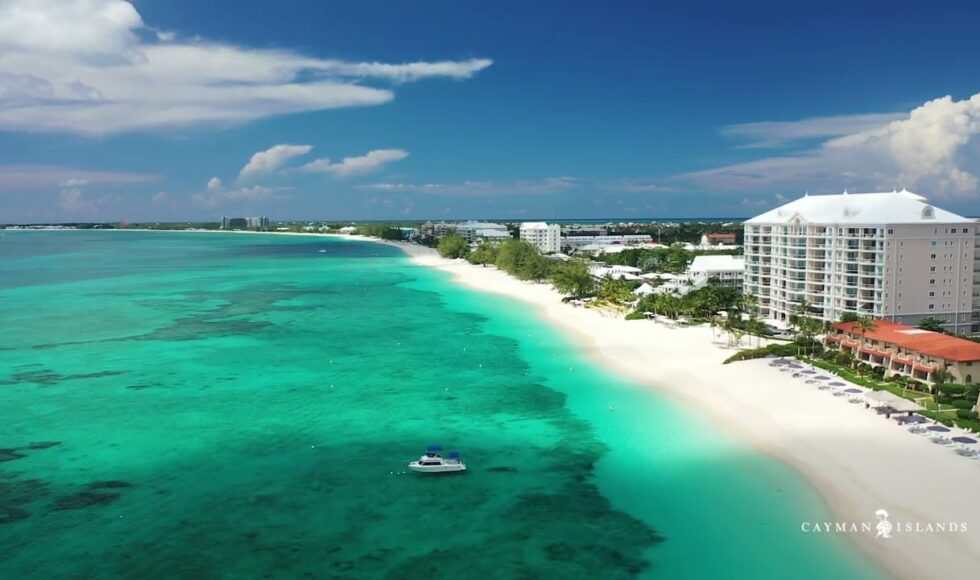
Cayman Islands

The Cayman Islands: Unveiling Its Offshore Tax Strategies

A Global Finance Hub and Tax Haven The Cayman Islands, well-known as a thriving hub of offshore investment, holds the distinction of being the world’s fourth most prominent international financial centre. The islands are home to a plethora of large banks, insurance companies, hedge funds, and accounting firms, cultivating a global reputation for offshore company formation that has evolved over the past five decades. The Cayman Islands has made significant efforts to align its financial regulations with those recommended by the Organisation for Economic Co-operation and Development (OECD). It has also shown a proactive stance towards international cooperation, especially in countering money laundering. The Financial Secrecy Index suggests that the Cayman Islands, despite recent crackdowns on offshore banking, continues to be one of the world’s most secure places for asset protection. The Cayman Islands boasts a rich portfolio of just under 100,000 international companies on its offshore registry. The country’s offshore banking laws are tailored to ensure privacy protection for individuals. However, since 2010, the UK’s desire for greater transparency in the industry has compelled the Cayman Islands to revise its offshore banking practices. Still, the global banking landscape in the Cayman Islands remains robust despite the evolving financial and banking environment. It is crucial for businesses to keep themselves updated with the latest developments in offshore corporate legislation due to the dynamic nature of the global financial industry. The Allure of the Cayman Islands: More than just a Tax Haven The Cayman Islands is more than just a tax haven; its tropical climate, pristine beaches, and world-class scuba diving also make it a favoured destination. The jurisdiction offers top-notch professional and financial services, making it a prime location for hedge fund companies, captive insurance businesses, and international investment managers who consider the Cayman Islands the ideal place to establish an offshore business. Here are a few reasons why the Cayman Islands stands out as a tax haven: An Overview of the Cayman Islands: Location, Politics, and Economy The Cayman Islands, composed of Grand Cayman, Cayman Brac, and Little Cayman, are nestled in the western part of the Caribbean, forming a part of the Greater Antilles Islands and the Western Caribbean Zone. These islands lie 700km south of Miami and 750km east of Mexico. Politically, the Cayman Islands, a British overseas territory, function as a parliamentary representative democracy under a constitutional monarchy. The local Legislative Assembly, which is elected every four years, is complemented by a Governor appointed by the Queen. The Governor holds considerable power under the constitution. The economy of the Cayman Islands leans heavily on tourism, accounting for about 70% of its GDP. However, sectors like banking, hedge fund management, and captive insurance also play a significant role. The islands are home to nearly 300 banks, including 40 of the world’s top 50 banks, which collectively generate over US 1.2 billion in revenue. This represents 55% of the total economy and provides employment to nearly a third of the population. The Cayman Islands maintains a high standard of living, offering world-class infrastructure and professional services. Although the country depends heavily on imports, it manages to maintain a low unemployment rate and virtually no poverty. The Tax Scenario in the Cayman Islands Historically, the Cayman Islands has been known for its stringent banking secrecy laws, which have drawn corporations and wealthy individuals from all corners of the globe. Its lack of corporate tax makes it a preferred location for multinational companies to establish subsidiary entities, allowing them to minimize their global income taxes by leveraging favourable policies. In addition to being a hub of banking practices, the Cayman Islands offers an appealing low-tax environment with no income tax, property tax, capital gains tax, payroll tax, or withholding tax. The only taxes levied are import tax and stamp duty, which stand at 22% and 7.5% respectively. In conclusion, the Cayman Islands has undeniably cemented its position as a tax haven. Yet, it continues to adapt to changing international standards of financial transparency and cooperation, indicating a future of ongoing evolution and growth.
Read more

The British Virgin Islands: A Tax Haven or Financial Center?

A Closer Look at the British Virgin Islands’ Financial Landscape The British Virgin Islands (BVI) are renowned globally as a favorable location for establishing an offshore business. Their attractive status is supported by a regulatory framework tailored specifically to lure offshore investors, with up-to-date company laws and regulations that pivot the islands as a global financial center. The BVI has an open economy, largely driven by the financial sector. Additionally, the BVI’s favorable tax laws and robust regulatory framework create an inviting business environment. Their commitment to transparency and regulation has earned them membership in the International Organization of Securities Commissions (IOSCO), the Caribbean Financial Action Task Force, and the Organization for Economic Cooperation and Development (OECD). As a testament to their compliance with international standards, they have been ‘whitelisted’ by all three organizations. Regulation of Offshore Companies in BVI The offshore company formation industry in the BVI is guided by the BVI Business Companies Act, which was enacted in 2004. This legislation overhauled the country’s company laws and has since played an instrumental role in BVI’s financial development. Approximately one-third of the BVI’s GDP is generated from offshore formation licensing fees and other financial services, such as bank account openings. The BVI has incorporated approximately 40% of the world’s offshore companies, forming over 600,000 companies since the inception of its non-resident company formation industry. It has demonstrated its commitment to transparency by signing the Multilateral Convention on Mutual Assistance in Tax Matters and the Common Reporting Standards (CRS) in 2017. Further bolstering its reputation, it introduced the Beneficial Ownership Secure Search Act (BOSS Act), making it harder for beneficial owners to remain anonymous. The Economic Prosperity of the British Virgin Islands The BVI is home to the most prosperous economy in the Caribbean, a feat achieved through a strong offshore banking and investment environment, fortified by a robust legal and accounting presence. This makes the BVI a comprehensive financial jurisdiction for offshore business ventures. Benefits of the British Virgin Islands as a Financial Center Offshore companies registered in the BVI are exempt from income tax, capital gains tax, gift taxes, inheritance taxes, sales taxes, and value-added taxes. Furthermore, leading international legal and accounting firms operate in the BVI, contributing to its esteemed reputation in the areas of funds and investments, corporate business, ship and aircraft registration, captive insurance, and trust and estate planning. The BVI has also signed over 17 Tax Information Exchange Agreements (TIEAs) with nations including Britain, France, Germany, Italy, and Spain. Other appealing factors include a sub-tropical climate, close ties with the U.S. Virgin Islands and Puerto Rico, and a stable government operating under British common law. Additionally, the BVI allows a significant amount of flexibility in corporate mergers and acquisitions. A Deeper Understanding of the British Virgin Islands The British Virgin Islands are situated in the Eastern Caribbean, to the east of Puerto Rico and in close proximity to the U.S. Virgin Islands. Comprising approximately 60 islands and islets, the territory is characterized by both flat coral islands and steep, hilly volcanic islands, all benefiting from a pleasant, subtropical climate. BVI is a self-governing overseas territory of the United Kingdom. The BVI Prime Minister heads the government, and its executive council is appointed from members of the Legislative branch’s House of Assembly by the BVI Governor. The economy is among the most prosperous in the Caribbean, with financial services and tourism being the primary drivers. BVI’s Legal Landscape The British Virgin Islands law is heavily based on English Common Law. It provides a stable framework for the formation of offshore companies and caters to all foreign investors. The BVI government steers clear from the term ‘tax haven’, stressing that the territory promotes legal tax avoidance rather than illegal tax evasion. In conclusion, the British Virgin Islands, through its strategic legislative efforts, robust financial services sector, and compliance with international standards, has created an environment that encourages offshore investment while maintaining financial integrity and transparency. Though some may label it a ‘tax haven’, the BVI is better understood as an international financial center, promoting ethical practices and adherence to global regulatory standards.
Read more

Unveiling Offshore Tax Strategies: The Bahamas – A True Tax Haven?

An Overview: Why the Bahamas? The Bahamas, a picturesque archipelago of over 700 islands, presents a sought-after tax haven for corporations and individuals seeking to establish an offshore company. Conveniently positioned near the United States, the country’s main trading partner, the Bahamas captivates visitors not only with its stunning beaches but also its thriving offshore financial market. The Bahamas’ economy leans heavily on tourism and offshore finance, which account for 60% and 30% of the country’s Gross Domestic Product (GDP) respectively. Despite substantial changes to its offshore financial market since 2001, the Bahamas has managed to maintain its reputation as a leading destination for offshore company formation, with legislation that supports the development of these sectors. Deciphering the Attraction: Tax Benefits in the Bahamas As one of the wealthiest Caribbean countries, with tourism and offshore banking forming the backbone of its economy, the Bahamas has been recognized as the third richest country on a per capita basis in the New World, after the United States and Canada. The Bahamian government keeps its currency, the Bahamian dollar (BSD), equivalent to the U.S. Dollar, providing fiscal stability and confidence to investors. Being politically stable since its independence and harboring approximately 30,000 American residents, the Bahamas offers a welcoming environment for foreign investors. With the absence of income tax, corporate tax, value-added tax, or wealth tax for offshore investments, foreign investments in tourism and banking are particularly encouraged. Navigating Offshore Banking in the Bahamas Primarily dominated by non-residents, the Bahamian offshore banking industry abides by stringent regulations designed specifically to control non-resident banking activities. Over the last few years, the Bahamas has been increasingly aligning itself with international standards in response to pressure from entities such as the USA and the Organisation for Economic Co-operation and Development (OECD). Despite stricter regulations, the process of opening an offshore bank account remains relatively straightforward, requiring proof of passport, address, funds, and a background check. Notably, these accounts can be held in multiple currencies, offering greater financial flexibility to account holders. The Allure of Offshore Banking in the Bahamas The advantages of offshore banking in the Bahamas extend beyond higher interest rates. The political and economic stability, the possibility for currency diversification, and robust financial privacy regulations are among the benefits that attract investors to this tax haven. Understanding the Bahamas: A Primer Situated in the North Atlantic Ocean, the Bahamas, known for its mild, tropical marine climate, offers an attractive lifestyle to residents and visitors alike. A stable political structure and well-developed infrastructure further amplify its appeal as an offshore company establishment destination. From being a British Crown colony, the Bahamas has evolved into a constitutional parliamentary democracy within the Commonwealth. The economy, infrastructure, and law all harmoniously create an environment conducive for offshore businesses, further solidifying the Bahamas’ position as a lucrative tax haven. Legalities: The Bahamian Law and Offshore Companies The Bahamian law, a common law system based on the English model, has incorporated certain features of the United States Constitution, thus providing a robust legal framework for business activities. The process of incorporating a company is transparent and regulated by laws like the International Business Companies Act and the Companies Act, 1992. As per the legislation, an International Business Corporation (IBC) can be incorporated through a registered agent, without the need for the investor to be present in person. These agents must hold a Financial and Corporate Service Providers License, and once the incorporation fee is paid, the turnaround time is typically 1 to 7 business days.
Read more

Unveiling Offshore Tax Strategies: Is Antigua a Genuine Tax Haven?

Antigua and Barbuda, nestled in the Eastern Caribbean, have steadily become an appealing location for businesses and individuals interested in leveraging offshore tax benefits. This dual-island nation provides a tax-free environment and an array of corporate structures, making it an ideal offshore financial destination. However, is Antigua truly a tax haven? Let’s dive deeper to uncover the tax strategies and benefits this paradise offers. Antigua’s Appeal as an Offshore Financial Destination Choosing to incorporate in Antigua provides a simple and cost-effective solution for businesses. Its most prominent corporate structure is the Antigua International Business Corporation (IBC), a popular choice for international entrepreneurs. Antigua is not only appealing for its tax benefits and straightforward offshore banking services. It’s also an idyllic destination with high living standards, well-developed infrastructure, and a laid-back atmosphere. This combination makes Antigua an attractive “all-rounder” for establishing an efficient offshore financial structure. The Perks of Antigua’s Tax Haven Status Antigua’s tax haven status offers numerous benefits. The foremost being that foreign-owned Antigua IBCs are completely tax-exempt. Furthermore, the incorporation process is highly flexible, requiring only one shareholder and one director, who can be the same person, regardless of nationality. Antigua values corporate privacy and confidentiality. Any disclosure of banking details or related information can lead to legal repercussions. In addition, the assets of an Antigua IBC are well-protected, with the IBC owning all its assets legally, ensuring their non-disclosure in public records. The process of forming and registering an IBC in Antigua can be completed in a few days, with no minimum authorized capital requirement. Also, as an English-speaking nation, Antigua presents no language barriers for international business transactions. One of the exceptional benefits that Antigua offers is its economic citizenship program. With a donation of just 100,000 USD, one can acquire second citizenship in one of the most affordable and recommended nations. Antigua has no exchange controls, fostering an environment conducive to seamless business transactions. Additionally, the nation boasts a robust and secure offshore banking sector, providing banking confidentiality and robust asset protection. Inside Antigua’s Tax Haven: Background and Structure Location and Political Structure The nation is primarily made up of two significant islands, Antigua and Barbuda, along with several smaller islands. St. John’s, the capital, is located on the island of Antigua. Despite gaining independence from Britain in 1981, Antigua and Barbuda maintain political ties with their former colonizer. The nation functions within a British-style political framework, operating as a unitary, parliamentary, representative democratic monarchy. It is a member of the Commonwealth, the United Nations, the World Trade Organization, and several other notable international institutions. Economy and Infrastructure The economy of Antigua is primarily supported by tourism and offshore financial services, earning it the highest per capita income in the Eastern Caribbean. The government revenue is mostly derived from indirect taxes such as import duties, tourist-related taxes, and licensing fees. Infrastructure in Antigua is well-developed with quality telecommunications systems, and it is well-connected with frequent flights to Europe, North America, and other Caribbean nations. Exchange Control and Legal System The Eastern Caribbean dollar, pegged to the US dollar, is the local currency. There are no exchange controls on monetary transactions of Antigua IBCs, making funds easily transferable on and off the island. The nation’s legal system is based on English Common Law, with the Antigua International Business Corporation Act of 1982 governing Antigua IBCs.
Read more

Exploring Offshore Tax Strategies: The Case of Anguilla

Anguilla’s Offshore Business Landscape Anguilla, a tax haven situated in the Caribbean, offers attractive offshore tax environments for both individuals and corporations. The island jurisdiction is well-known for its beneficial offshore company structures, notably the Anguilla Limited Liability Company (LLC) and the Anguilla International Business Company (IBC). These structures offer robust confidentiality, security, and anonymity through a highly adaptable corporate architecture. Anguilla’s offshore laws, regulated by an English Common Law system, encompass five key legislative measures tailored to support the island’s offshore financial market. Anguilla’s regulatory environment, characterized by minimal local and reporting prerequisites, is designed to draw international investors. As such, offshore companies in Anguilla enjoy the freedom to conduct and transfer business without extensive administrative red tape and complex financial auditing procedures. For residents, Anguilla represents a truly tax-free zone, with taxes only imposed on members in their country of residence. The formation of an offshore company requires just one member and can be accomplished swiftly and cost-effectively. Anguilla’s international companies offer clients a flexible corporate management structure, empowering businesses to customize their organization as per their unique needs. Adding to the allure, Anguilla’s offshore regulations enable clients to access nominee services and waive the need for financial auditing or reporting, reinforcing confidentiality and privacy in an already favorable offshore environment. Unveiling the Benefits of Anguilla as a Tax Haven Anguilla presents an array of benefits as a tax haven, most prominently: Deep Dive into Anguilla’s Tax Haven A Geographical Overview Anguilla, nestled in the Caribbean as part of the British West Indies, lies in the northern region of the Leeward Islands within the Lesser Antilles chain near Puerto Rico and the Virgin Islands. The jurisdiction encompasses one main island and several smaller ones, including Sombrero, Scrub, Seal and Dog Islands, and Prickly Pear Cays, making a total land area of 90 square kilometers. Anguilla’s Political Structure Anguilla, though an overseas territory of the United Kingdom, operates under a self-governing structure, lacking complete political independence or sovereignty. The island’s government includes executive, legislative, and judicial branches, with the Chief Minister heading the government. The Chief Minister is appointed by the Governor from the legislative House of Assembly, which consists of eleven members. Economy and Infrastructure Anguilla’s economy revolves around tourism, offshore financial services, insurance, and fishing. Despite past hardships due to hurricanes and the global recession, the economy has been resilient, with a GDP rising at an average rate of 3% annually. Boat building serves as the main industry, alongside tourism and offshore services. The capital, The Valley, is situated in the island’s center and houses an international airport connecting Anguilla with other Caribbean islands. The island lacks public transport, relying heavily on taxis and regular ferries for commuting. Currency and Exchange Control Anguilla’s currency is the East Caribbean Dollar (XCD), with a fixed exchange rate of USD 1 = XCD 2.7. However, the US Dollar is also widely accepted across the island. Notably, there are no exchange controls in Anguilla. Principal Corporate Legislation Anguilla’s offshore financial services market operates under five pieces of critical legislation, reflecting the island’s progressive financial structuring. The governing laws, managed under the Financial Services Authority, are fully supported by a cooperative government with a robust tradition of backing the offshore financial service industry. Taxation of Offshore Companies in Anguilla Whether resident or non-resident, individuals in Anguilla are exempt from paying taxes within the jurisdiction, making it a truly tax-neutral environment. Though there is a stamp duty ranging between 0-5%, property tax of 0.75%, and a land transfer tax of 5%, Anguilla IBC’s, LLCs, and individuals are exempt from a wide range of taxes, including corporate, inheritance, gift, income, capital gains, and estate taxes. Conclusion In summary, Anguilla’s unique tax environment, political stability, and supportive regulations make it an attractive destination for businesses seeking offshore opportunities. While the absence of certain taxes presents clear advantages, companies must carefully consider their specific requirements, potential risks, and long-term strategies before choosing to incorporate in any offshore jurisdiction, including Anguilla.
Read more

Unveiling the Tax Strategies of the United Kingdom: A Pseudo-Tax Haven?

The UK’s Position as a Global Financial Hub The United Kingdom has long been recognized as a global economic power and an international financial center. Boasting a network of over 300 banks with around 9,000 branches, it is unsurprising that the UK holds the position of the world’s second leading financial center. This robust financial landscape presents a myriad of opportunities for companies seeking to establish an offshore presence. Interestingly, while the UK is not typically classified as an offshore tax haven, it presents several key features traditionally associated with such jurisdictions. Its modern financial center, geographical proximity to Europe, and access to both European and global markets make it an attractive prospect for offshore businesses. It’s worth noting the potential benefits from numerous trade agreements and the UK’s Double Taxation treaties, offering a broad spectrum of opportunities for global businesses. Tax Benefits of Offshore Business Establishment in the UK The UK provides an array of offshore products designed to offer tax-through structures. Such arrangements can essentially exempt companies from paying local taxes if they choose structures like the UK Limited Liability Partnership (LLP). Consequently, these organizations enjoy the same advantages as those in traditional offshore jurisdictions while retaining the prestige associated with incorporating in a high-tax country. There are many advantages of setting up an offshore business in the UK, such as: The United Kingdom: A Background Overview Location The United Kingdom, comprising England, Scotland, Wales, and Northern Ireland, is a sovereign state situated off the northwest coast of Europe. It encompasses the island of Great Britain, Northern Ireland, and numerous smaller islands. Besides Northern Ireland, the UK is surrounded by water bodies, including the Atlantic Ocean, the North Sea, the English Channel, and the Celtic Sea. Political Structure The UK operates as a constitutional monarchy under a parliamentary governance system based on the Westminster system. Queen Elizabeth II serves as the head of state, while the Prime Minister acts as the head of government, commanding the confidence of the House of Commons. The UK’s political system revolves around a multi-party system, primarily dominated by the Conservative Party, the Labour Party, and the Liberal Democrats. The UK is a member of several international and regional organizations, including the UN, G8, ICC, WHO, WTO, and played a pivotal role within the European Union. Economy and Infrastructure As the world’s fifth-largest economy in terms of nominal GDP and tenth-largest by Purchasing Power Parity (PPP), the UK wields considerable global influence economically, culturally, and politically. The British economy is predominantly service-oriented, accounting for 78% of the GDP. London is globally recognized as the world’s largest financial center, with significant contributions from the pharmaceutical, automotive, and aerospace industry. The agricultural system, the construction industry, and the production sector also contribute significantly to the UK’s economy. The country boasts an advanced and efficient infrastructure, including a modern and expansive public transport system and a world-class telecommunications network. Exchange Control and Legal System The UK has no exchange controls, allowing for free movement of financial assets into and out of the country. It operates under a common-law system, divided into three distinct jurisdictions: English law, Northern Ireland law, and Scots law. Corporate Legislation The principal corporate legislation governing the UK includes the Companies Act 1985 (amended in 2006) and the Limited Liability Act 2000. Taxation Companies with non-resident members not conducting business within the UK are not subject to local UK taxes. Tax obligations apply only within the members’ country of residence. The UK levies a corporate tax rate of 20% as of 2015, applicable only to income generated within the country. There is no double taxation on dividends distributed to EU member countries. In conclusion, the United Kingdom, with its robust economy, stable political environment, and beneficial tax arrangements, can be considered a viable alternative to traditional tax havens. Despite not being commonly recognized as an offshore tax haven, its features, accessibility, and respectability make it an attractive destination for businesses looking to establish an offshore presence.
Read more
  • +971 56 403 8600
  • info@privatewolf.ae
  • 06, 11B Happiness Street, CityWalk, Dubai
Unknown